Who Are the Top Field Jacket Manufacturers in China?
“Buy less, choose well, make it last,” is advice often attributed to British fashion designer Vivienne Westwood. It offers a useful lens for comparing Field Jacket manufacturers in China: a dependable jacket should earn its place through construction, comfort, and lasting performance—not a polished product photo alone.
A Field Jacket may look simple on a hanger. In use, details matter. Check the stitching around pocket corners, the feel of the zipper, and whether the collar holds its shape after repeated wear. Fabric weight and lining also affect comfort across changing temperatures. These details reveal how carefully a manufacturer turns a design into a finished garment.
China has a broad network of apparel factories, but capabilities vary. Some suppliers focus on technical outerwear; others are better suited to straightforward workwear or larger production runs. Buyers should compare sample quality, material options, customization, communication, and production consistency. Ask for clear specifications, inspect a physical sample, and confirm which steps the factory performs itself. A low quoted price tells only part of the story.
The comparison that follows looks at manufacturers through practical sourcing criteria, rather than promotional claims. It is not a substitute for factory verification. Even a promising sample can disappoint at scale. That deserves attention. A careful shortlist can help brands find a partner whose workmanship, capacity, and communication fit their actual needs.
Field Jackets Explained: Military Design, Utility Features, and Fabric Systems
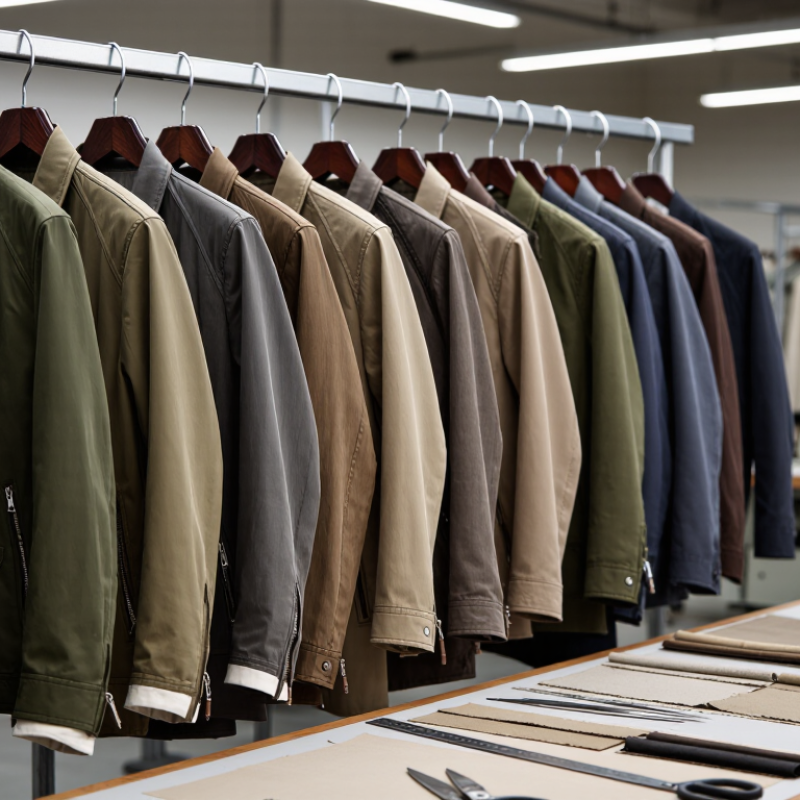
Field jackets borrow their shape from military clothing, but their value lies in practical details. A slightly longer body helps cover the waist when bending or reaching. Roomy sleeves allow a base layer underneath, while adjustable cuffs can limit drafts. The fit should still permit easy movement. Too many layers can feel stiff.
Utility features need to work, not merely look convincing. Chest pockets keep small items close, and lower pockets can hold gloves or a folded map. Button flaps help shield pocket openings, while a two-way zipper can make sitting more comfortable. On a sample jacket, check whether pocket corners pull under weight. A pocket can look useful and still sag.
Fabric choice shapes warmth, weight, and wear. Cotton twill feels substantial, while ripstop fabric uses a visible grid that can help limit tearing. Blended fabrics may dry faster, but their feel and breathability vary by construction. A water-repellent finish is not the same as a waterproof shell. There is no perfect fabric system for every climate; that is easy to overlook. For buyers comparing Chinese manufacturers, request fabric specifications and inspect stitching, closures, and finished samples before confirming bulk production. Feel the seams. A neat sample does not guarantee every production run will match.
China’s Manufacturer Landscape: OEM/ODM Models, Export Markets, and Factory Scale
China’s field-jacket supply base is not one uniform industry. Some factories handle cut-and-sew OEM work to buyer specifications; others offer ODM designs, fabrics, and trim packages. The distinction matters. An OEM partner may quote quickly when patterns and material lists are complete. ODM can shorten development, but may limit changes to existing designs. Ask to review construction sheets, seam details, pocket reinforcement, and sample timelines—not just catalog photos. Small details show capability.
Export experience also varies. Suppliers shipping to North America, Europe, Japan, or Australia may know different labeling, packing, and inspection routines. Verify that knowledge with recent, comparable orders. Factory scale is easy to misread: a large workforce does not guarantee consistent stitching, and a small workshop is not automatically more flexible. Request a production walk-through, monthly capacity, subcontracting details, and inspection records for similar jackets. Check whether shell fabric, lining, zippers, and buttons can be sourced consistently. A sample can look excellent. Bulk runs may differ. Buyers sometimes focus on unit price before confirming fabric continuity or reorder lead times. That can create avoidable surprises. Compare the actual process, not just the sales pitch.
Technical Standards: ISO 13688, EN 343, and ISO 20471 Classes 1–3
Who Are the Top Field Jacket Manufacturers in China?
Technical Standards: ISO 13688, EN 343, and ISO 20471 Classes 1–3
For field jackets, standards matter most when they match the job. ISO 13688 covers general protective-clothing requirements, including ergonomics, sizing, and information supplied with the garment. It is not a standalone measure of protection. EN 343 addresses protection from rain, including resistance to water penetration and water-vapour resistance. Ask manufacturers for test reports that identify the tested material and garment construction. A fabric result alone may not represent a finished jacket with seams, pockets, and closures. Details matter.
ISO 20471 sets requirements for high-visibility clothing, with Classes 1, 2, and 3 reflecting different visibility levels. The required class depends on the work environment and risk assessment; brighter trim does not automatically make a jacket compliant. Check reflective tape placement, fluorescent material area, sizing options, and performance after the specified care process. Request clear labels and supporting documentation, then verify that the delivered model matches the tested design. Not enough alone. A supplier may present certificates, but buyers should check their scope, validity, and relevance to the exact product. One weakness in sourcing is assuming paperwork guarantees consistent production. It doesn’t. A pre-production sample and repeat checks can reveal practical issues, such as stiff seams or a hood that blocks peripheral vision.
ISO 20471 Material Requirements for High-Visibility Field Jackets
ISO 20471 specifies minimum areas of background and retroreflective material for each visibility class. ISO 13688 covers general protective-clothing requirements, while EN 343 addresses protection against rain; those standards use different assessment criteria and are not represented in this area chart.
Supplier Quality Metrics: ISO 2859-1 Sampling and AQL Inspection Levels
For buyers comparing field jacket manufacturers in China, inspection plans should be agreed before bulk production. ISO 2859-1:2021 provides attribute-sampling tables for lot-by-lot inspection. For a lot of 3,201–10,000 pieces, General Inspection Level II assigns code letter L, which means a 200-piece sample. Under normal single sampling at AQL 2.5, the table permits acceptance with up to 10 major nonconformities; 11 triggers rejection. Confirm the applicable table and defect classifications with the inspection provider before using these figures.
Make the checks specific to the jacket. Inspect pocket position, seam stitching, zipper operation, snap strength, and fabric shade under consistent lighting. Record defects by severity, with clear photos and measurements; “poor workmanship” alone is too vague. Small details matter. AQL is a lot-acceptance rule, not a promise that every garment is defect-free or that the accepted lot contains exactly 2.5 percent defects. The ISO sampling plan sets decision thresholds, while the buyer defines what counts as critical, major, or minor. A practical weakness is that teams may disagree on borderline defects, especially uneven topstitching. Calibrate inspectors with approved samples, and document disagreements before shipment.
Who Are the Top Field Jacket Manufacturers in China? - Supplier Quality Metrics: ISO 2859-1 Sampling and AQL Inspection Levels
This standards-based reference helps buyers assess field-jacket suppliers without presenting unverifiable company rankings or supplier-specific performance claims. Sample sizes below follow ISO 2859-1, normal inspection, single sampling, General Inspection Level II. AQL values are buyer-selected inspection criteria, not manufacturer ratings.
| Quality dimension |
Field-jacket inspection focus |
Typical buyer-set criterion |
Verification method |
| Critical defects |
Safety or regulatory hazards, such as a sharp point or prohibited substance above the applicable limit |
Zero acceptance; define separately in the inspection agreement |
Visual and functional checks; applicable laboratory testing where required |
| Major defects |
Defects likely to affect use, fit, weather protection, or saleability—for example, a failed main zipper or materially incorrect measurements |
AQL 2.5 is a commonly selected buyer criterion |
Random inspection against approved sample, specification, and measurement tolerances |
| Minor defects |
Small cosmetic issues not expected to materially affect use, such as a minor loose thread or slight workmanship irregularity |
AQL 4.0 is a commonly selected buyer criterion |
Visual inspection under agreed lighting and workmanship standards |
| Fabric and trims |
Shell fabric, lining, insulation, buttons, snaps, hook-and-loop fasteners, and zipper components match the approved specification |
Match approved bill of materials, color standard, and test requirements |
Document review, shade comparison, and agreed performance tests |
| Labeling and packing |
Size, care, fiber-content, country-of-origin, barcode, and carton information |
Conform to destination-market rules and buyer-approved artwork |
Check labels and cartons against approved packing specifications |
ISO 2859-1 Sample Size Reference
| Lot size (units) |
Code letter |
Sample size (units) |
Example use |
| 2–8 | A | 2 | Very small inspection lot |
| 9–15 | B | 3 | Small inspection lot |
| 16–25 | C | 5 | Small production batch |
| 26–50 | D | 8 | Small production batch |
| 51–90 | E | 13 | Small-to-medium lot |
| 91–150 | F | 20 | Small-to-medium lot |
| 151–280 | G | 32 | Medium lot |
| 281–500 | H | 50 | Medium lot |
| 501–1,200 | J | 80 | Common production-lot example |
| 1,201–3,200 | K | 125 | Larger production lot |
| 3,201–10,000 | L | 200 | Larger production lot |
| 10,001–35,000 | M | 315 | High-volume production lot |
| 35,001–150,000 | N | 500 | High-volume production lot |
| 150,001–500,000 | P | 800 | Very high-volume production lot |
| 500,001 and over | Q | 1,250 | Very high-volume production lot |
Note: The code letter determines the sample size; acceptance and rejection numbers depend on the selected AQL and the applicable ISO 2859-1 sampling-plan table. Confirm the standard edition, inspection severity, defect definitions, and acceptance rules in the purchase agreement. AQL is a sampling-plan index, not a promise that a lot contains that exact percentage of defects.
Comparing Manufacturers: MOQ, Lead Time, Compliance, and Cost Drivers
Field jacket sourcing is not a simple price comparison. A low quoted unit cost may exclude fabric testing, custom hardware, or pattern changes. Ask each manufacturer to price the same specification: shell fabric, lining, pocket count, trim, and packaging. Small runs cost more. MOQ often depends on fabric mills, dye lots, and hardware availability, so request separate minimums for stock and custom materials.
Lead time should be split into sampling, material booking, bulk production, and final inspection. The World Bank’s 2023 Logistics Performance Index ranked China 19th among 139 economies, but national logistics performance cannot predict an individual factory’s schedule. Ask for dated milestones and a delay buffer. Then verify capacity against recent production records. Promises are easy.
Compliance also affects cost and timing. The OECD Garment and Footwear Guidance recommends risk-based due diligence across supply chains; buyers should check facility records, material traceability, and corrective-action follow-up. Testing requirements can add fees and days, especially when a fabric or coating changes. I still see buyers underestimate revision rounds. Compare quotes only after confirming what audits, tests, and rework are included. Freight, exchange rates, fabric yield, and order size can shift the final landed cost more than a small difference in labor pricing.