Choosing the right Redtape Jacket manufacturer requires more than comparing factory prices. Global buyers must examine construction quality, fabric performance, production capacity, and communication habits. A jacket may look impressive in a showroom. Its seams can still twist after washing.
Experienced buyers usually request samples before discussing large production volumes. They inspect zipper movement, cuff recovery, lining comfort, and stitching density. They also compare sample quality with the factory’s actual production line. This small step often reveals important differences.
Fashion sustainability scholar Kate Fletcher has said, “Sustainability is not about doing less harm. It’s about doing more good.” Her principle matters when evaluating a Redtape Jacket supplier. Responsible manufacturers should explain their material sources, waste controls, worker standards, and quality procedures clearly. Buyers should ask for evidence, not polished promises.
Factory experience matters.
A dependable manufacturer can usually provide clear size charts, realistic lead times, inspection records, and consistent sample development. Strong suppliers also understand regional preferences, including insulation levels, weather resistance, pocket placement, and retail packaging. However, no supplier is perfect. Even an experienced factory may miss a color shade or delay a shipment during peak season.
This guide examines leading Redtape Jacket manufacturers for global buyers. It focuses on practical selection criteria, including technical capability, customization support, factory transparency, and communication reliability. The best choice may not be the cheapest quotation. It is often the supplier that identifies problems early, documents decisions carefully, and improves after honest feedback.
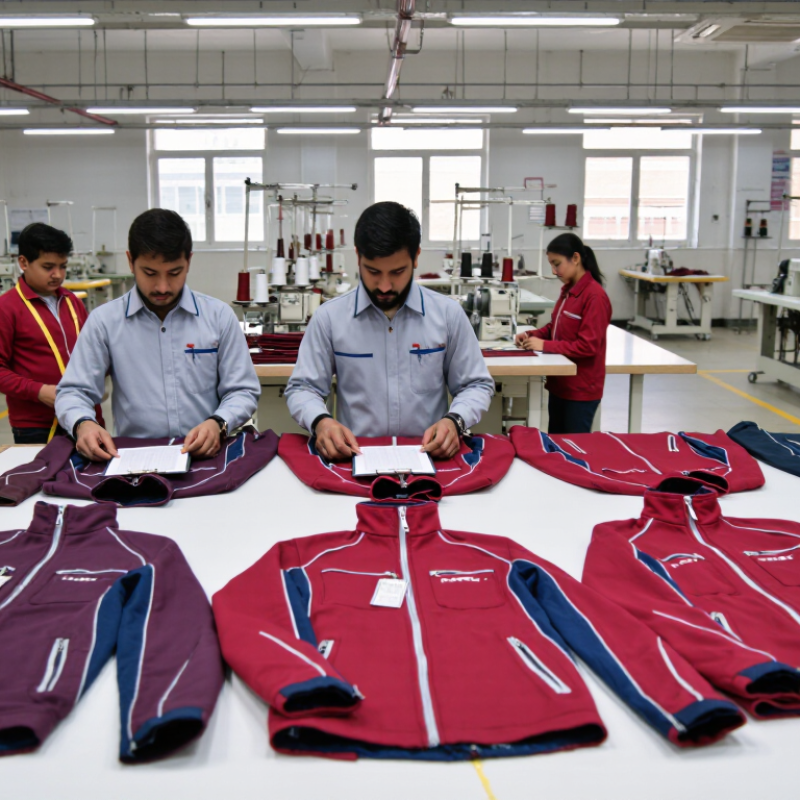
A contemporary jacket label usually serves several practical categories: lightweight windbreakers, padded winter jackets, bomber silhouettes, denim layers, and water-resistant commuter shells. Each category needs different factory skills. Padded styles require controlled filling distribution, while shells depend on seam sealing and reliable zippers. In supplier reviews, I check sample measurements twice. Small sleeve errors become expensive at scale.
Market data supports this product spread. Grand View Research valued the global apparel market at about USD 1.74 trillion in 2023, with continued growth expected through 2030. Textile Exchange reported that polyester represented roughly 59% of global fiber production in 2023. That figure explains its popularity in affordable outerwear, but material claims still need verification. Recycled content is not automatically better.
For global buyers, capable manufacturers should provide fabric test reports, colorfastness results, wash samples, and documented inspection records. The International Organization for Standardization offers relevant textile testing frameworks, yet paperwork alone cannot prove factory consistency. I would also inspect stitching density, pocket reinforcement, lining comfort, and carton protection. These details often reveal weak production control. Delivery estimates can look impressive. They can still fail during peak seasons. A better assessment combines factory experience, transparent sourcing, realistic capacity, and repeated sample approval. My own view remains cautious: product categories make a range attractive, but dependable execution determines whether buyers return.
| Product Category | Typical End Use | Common Materials | Standard Product Features | Climate Suitability | Key Buyer Verification Points |
|---|---|---|---|---|---|
| Lightweight Casual Jackets | Daily wear, commuting, travel and transitional-season collections | Polyester Nylon Cotton Blends | Full-front zipper, side pockets, ribbed cuffs, adjustable hem and lightweight lining | Mild spring, autumn and cool indoor environments | Fabric weight, colorfastness, zipper quality, seam appearance and size consistency |
| Windbreaker Jackets | Outdoor leisure, city commuting and light activity | Woven Polyester Nylon Polyester Lining | Wind-resistant shell, hood option, elastic cuffs, drawcord hem and compact construction | Windy and mildly wet conditions | Wind-resistance testing, coating durability, hood construction and water-repellent performance |
| Puffer and Quilted Jackets | Winter fashion, commuting and cold-weather daily wear | Polyester Shell Nylon Shell Synthetic Fill | Quilted panels, insulated filling, stand collar or hood, snap or zip closure and inner pockets | Cool to cold weather, depending on fill weight and construction | Fill composition, fill weight, loft retention, quilting accuracy and down-related documentation where applicable |
| Softshell Jackets | Hiking, outdoor recreation, travel and active casualwear | Stretch Polyester Elastane Blend Bonded Fleece | Two-way stretch, breathable construction, adjustable cuffs, secure pockets and brushed inner layer | Cool, windy and moderately damp conditions | Stretch recovery, breathability, pilling resistance, bonded-layer strength and abrasion performance |
| Rain and Waterproof Jackets | Rainwear, outdoor work, travel and wet-weather activities | Coated Polyester Coated Nylon Laminated Fabrics | Waterproof shell, sealed or protected seams, storm flap, adjustable hood and waterproof pockets | Wet and rainy conditions | Waterproof rating, hydrostatic pressure, seam sealing, breathability and coating wash durability |
| Fleece and Knit Jackets | Layering, casualwear, travel and low-intensity outdoor use | Polyester Fleece Cotton Knit Recycled Fibres | Soft hand feel, brushed interior, zip front, high collar, elastic binding and practical pockets | Cool and dry conditions; suitable as a mid-layer | Fabric density, pilling resistance, shrinkage, colorfastness and surface appearance after laundering |
| Denim and Twill Jackets | Fashion collections, casual uniforms and everyday streetwear | Cotton Denim Cotton Twill Cotton Blends | Metal buttons or zippers, chest pockets, reinforced seams, garment washing and structured fit | Mild and transitional climates | Fabric weight, wash consistency, crocking, dimensional stability, trims and color variation |
| Workwear and Utility Jackets | Industrial work, logistics, maintenance and service operations | Polyester-Cotton Canvas Ripstop | Reinforced seams, multiple pockets, durable closures, high-visibility options and ID loops | Indoor or outdoor work environments, depending on fabric and insulation | Tear strength, abrasion resistance, seam strength, pocket load capacity and safety requirements |
| Packable Travel Jackets | Travel retail, outdoor leisure and space-saving seasonal products | Lightweight Nylon Polyester Synthetic Insulation | Low-bulk design, storage pouch, lightweight trims, secure pockets and quick-dry construction | Variable conditions and travel between climates | Packed volume, recovery after unpacking, seam durability, zipper operation and care-label accuracy |
| Custom Private-Label Jacket Programs | Retail collections, uniforms, promotional ranges and seasonal launches | Buyer-Specified Fabrics Custom Trims Mixed Constructions | Custom patterns, labels, packaging, color matching, logo application and graded size ranges | Defined by the selected fabric, insulation and intended market | Sampling process, minimum order quantity, lead time, inspection standard, labeling rules and export documentation |