How to Choose the Best Skater Skirt for Your Store?
Choosing the right Skater Skirt can shape your store’s style, margins, and customer loyalty. The decision involves more than color or seasonal trends. Buyers must examine fabric recovery, waistband comfort, lining quality, stitching, sizing, and supplier consistency. A skirt may look attractive on a hanger, yet feel restrictive after several hours of wear.
This guide explores practical criteria for selecting styles that deserve shelf space. It considers customer profiles, retail price targets, size ranges, fabric performance, and purchasing quantities. A lightweight cotton blend may suit warm-weather shoppers, while ponte or structured polyester can provide better shape retention. Sample testing remains essential. Check the hem after movement, inspect seams inside the garment, and compare measurements across sizes. Small differences can create costly returns.
No buying formula works perfectly. That matters. Local preferences, climate, and store positioning can change the best choice. Trend data may support a decision, but direct customer feedback often reveals problems earlier. Ask shoppers about pocket depth, waistband pressure, length, and care expectations. Review sales by size and color before repeating an order. Reliable suppliers should provide clear fiber details, care instructions, consistent measurements, and production samples. They should also communicate honestly about lead times and quality control. A polished image is not enough. By combining hands-on inspection, customer evidence, and disciplined supplier evaluation, retailers can build a Skater Skirt assortment that looks appealing and performs reliably.
Understanding Skater Skirts and Their Key Features
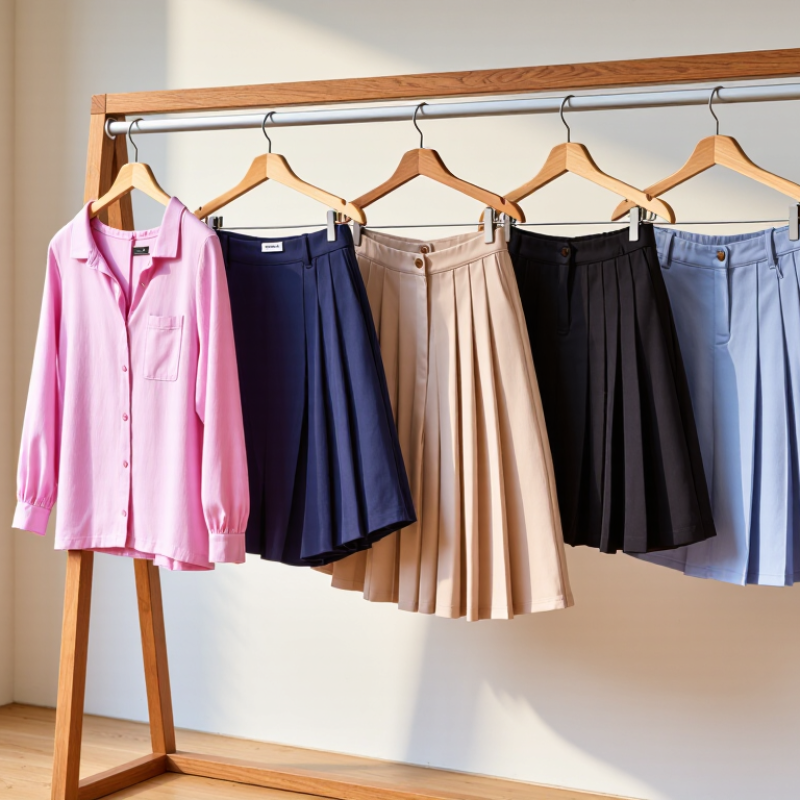
A skater skirt is defined by a fitted waist and a flared shape that moves freely around the legs. Its circular or gently gathered cut creates volume without requiring a stiff structure. Fabric changes the effect: lightweight woven cotton swings softly, while a heavier knit tends to hold a rounder shape. Check how the skirt hangs when still and when walking. Fit matters. The waistband should sit securely without pinching, and the hem should fall evenly when the wearer turns. A sample may look balanced on a hanger but pull differently across varied hip shapes, so check more than one size.
For a store, compare construction details as closely as the silhouette. Look for smooth seams, consistent stitching, and lining that does not twist or peek below the hem. Ask suppliers for fabric composition, care instructions, size measurements, and available color options; verify the information against physical samples when possible. A useful range might include everyday neutrals and a few seasonal colors, but demand can differ by customer and climate. Don’t assume a fuller flare suits everyone. Some shoppers prefer less volume, and product photos may not show that difference clearly. Consider notes from fittings and returns when refining future orders.
Identifying Your Store’s Target Customers and Style Needs
How to Choose the Best Skater Skirt for Your Store?
Identifying Your Store’s Target Customers and Style Needs
Start with evidence. Review your sales records, customer questions, and fitting-room feedback before choosing new skater skirts. A younger audience may prefer shorter hemlines, bold colors, and flexible fabrics for casual outfits. Working customers might seek knee-length styles, darker shades, and structured waistbands. Do not guess too quickly. A lively online response may not reflect repeat purchasing behavior.
Visit your sales floor during busy hours and observe how shoppers handle garments. Do they check the waistband first? Do they compare skirt volume with fitted tops? These details reveal practical preferences. Measure your current bestsellers, including waist rise, hem width, and fabric weight. A lightweight woven skirt moves easily, while a heavier fabric creates a more polished shape. Both serve different wardrobes.
Test a small range before committing to deep inventory. Offer two lengths, three neutral shades, and one seasonal color. Ask customers about comfort after sitting, walking, and climbing stairs. Their comments can expose problems that photographs hide. I have found that generous flare attracts attention, but excessive volume can frustrate customers in narrow changing rooms. Keep the fit honest. Store staff should record returns and exchanges by size and reason. That simple habit improves future buying decisions.
Comparing Fabrics, Fit, Length, and Construction
How to Choose the Best Skater Skirt for Your Store?
Fabric affects comfort, price, drape, and return risk. Polyester offers shape retention and easy care, while cotton feels breathable against skin. Textile Exchange reported polyester accounted for about 57% of global fiber production in 2023. However, high polyester content may feel warm under strong lighting or summer heat. A cotton blend can balance softness, durability, and production cost. No fabric wins every test.
Fit should support movement without losing the skirt’s flared shape. Check the waistband after sitting, walking, and bending. An elastic back can accommodate small size changes, but excessive gathering may look uneven. The International Apparel Federation identifies inconsistent sizing as a continuing industry challenge. Therefore, measure the finished garment, not only the pattern. Include waist, hip, rise, and hem measurements in your buying sheet.
Length changes the customer’s experience. A 40-centimeter skirt may suit younger styling, while a 55-centimeter length can feel safer for workwear. Always test lengths on different heights. Construction deserves equal attention. Inspect seam allowance, lining coverage, zipper strength, and hem stability. WRAP reported that extending clothing life by nine months can reduce its carbon, water, and waste footprints by 20–30%. Strong stitching supports that goal. Still, even careful inspection can miss a weak zipper. Order samples, wash them, and review the flaws before committing to bulk quantities.
Evaluating Suppliers, Quality, and Pricing
Choosing the best skater skirt for your store starts with a careful supplier review. Request physical samples before placing a bulk order. Photos often hide weak stitching, uneven hems, or thin fabric. I once approved a sample too quickly. The waistband twisted after washing. That mistake taught me to test every critical detail.
Check the fabric weight, stretch recovery, and colorfastness. A skirt should keep its shape after repeated movement. Inspect the zipper, seams, lining, and waistband attachment. Measure the sample against your size chart. Ask how the supplier grades larger sizes. Poor grading can create tight waists and uneven flare. Small details matter. Request wash-test results when available, but perform your own test too.
Pricing needs more than a unit quote. Compare fabric quality, minimum order quantity, sampling fees, packaging, and shipping terms. A cheaper skirt may require costly repairs or produce more returns. Ask for a clear production timeline and written quality standards. Confirm the replacement process for defective pieces. Reliable suppliers answer specific questions and admit limitations. That builds trust. Still, communication can fail during busy seasons, so record every agreement. Review the final quotation beside your expected retail price and margin. Leave room for unexpected costs, because perfect forecasts are rare.
How to Choose the Best Skater Skirt for Your Store
This planning benchmark compares anonymous supplier profiles using typical wholesale indicators for skater skirts: unit price for a 500-unit order and an inspection-based quality score covering fabric, stitching, colorfastness, sizing consistency, and finishing.
A lower wholesale price can improve margins, but the highest-quality option may reduce returns and customer complaints. Request samples and verify fabric composition, measurement tolerances, colorfastness, minimum order quantity, and production lead time before selecting a supplier.
Selecting a Balanced Skater Skirt Assortment for Your Store
How to Choose the Best Skater Skirt for Your Store?
Selecting a balanced skater skirt assortment starts with customer use, not a crowded color chart. A practical range should include everyday cotton, polished woven fabric, and one seasonal texture. Keep core shades such as black, navy, and neutral beige. Add limited fashion colors carefully. Too many bright options can leave slow-moving stock after one trend fades.
Fit deserves equal attention. A skater skirt needs a stable waistband, comfortable rise, and enough flare for movement. Offer regular and extended sizes when demand supports them. The National Retail Federation and Appriss Retail reported $743 billion in U.S. retail returns in 2023, representing 14.5% of annual sales. Poor fit can quietly damage margins. Check waistband recovery, lining quality, and pocket placement before placing larger orders. Small details matter.
Price architecture also needs balance. McKinsey and The Business of Fashion’s State of Fashion 2025 report expects modest industry growth, making disciplined buying more important. Build an opening-price option, a dependable mid-range style, and a better-fabric piece. Do not overinvest in the most expensive tier without local evidence. Review sell-through weekly by size, color, and fabric.
My own buying lesson is simple: attractive samples can mislead. Store lighting, changing-room space, and customer styling habits can alter performance. Leave room to adjust. A balanced assortment is never perfectly balanced.