Top 10 Kids Jackets Manufacturers for Global Buyers
Finding reliable Kids Jackets manufacturers takes more than comparing polished catalog photos. Buyers need to understand fabric performance, construction quality, order flexibility, and communication before committing to production. A jacket may look sturdy on a screen, yet weak stitching or a stiff zipper can disappoint after repeated wear. Details matter. This guide introduces ten manufacturers for global buyers and highlights what to examine when building a shortlist. The companies differ in product focus, production capacity, customization, and sourcing support, so their order should not be treated as a universal ranking. No list is perfect.
When reviewing a supplier, ask for clear product specifications, fabric and trim options, sample procedures, minimum order quantities, and realistic lead times. Request close-up photos of seams, cuffs, lining, and zipper finishes; these small areas can reveal more than a broad factory overview. Buyers should also confirm which quality checks and product documents are available for their target market, rather than relying on vague assurances. A sample helps, but it cannot predict every production issue. Keep that in mind. The best partner depends on your budget, seasonal calendar, expected volumes, and product range—from lightweight rain shells to insulated winter coats. Use the profiles below as a starting point, then verify current capabilities directly. Supplier details can change, and an unanswered question early may become an expensive delay later. Some comparisons remain imperfect, especially when manufacturers publish different levels of information.
Kids’ Jackets: Product Types, Materials, and Core Manufacturing Stages
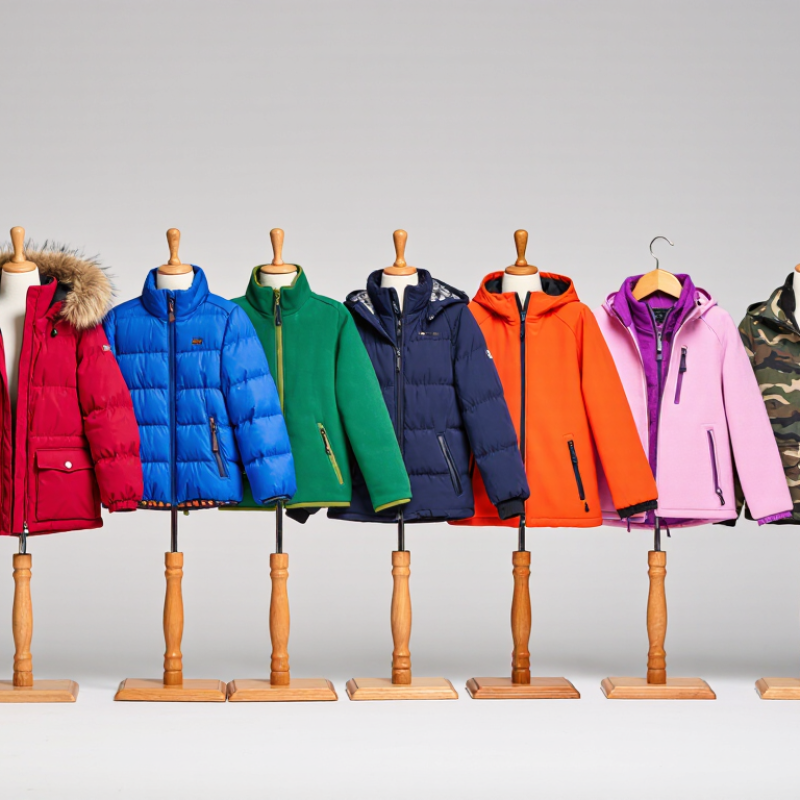
Kids’ jackets cover several distinct needs. Lightweight windbreakers suit mild, changeable weather, while insulated coats add warmth through synthetic fill or down-like padding. Rain jackets rely on tightly woven shells and sealed or covered seams. Some designs combine a water-resistant outer layer with a soft lining. Fit matters: sleeves should allow movement, and cuffs should sit comfortably over a child’s wrists. Small details count. A zipper guard can reduce rubbing at the chin.
Material choice shapes comfort, durability, and care requirements. Polyester is common for shells because it dries quickly and handles regular wear; cotton blends may feel softer but can take longer to dry. Fleece linings add warmth without much weight. Still, fabric names alone tell little. Buyers should check fabric weight, coating consistency, seam construction, and how the garment feels after washing. A sample may look excellent on a hanger, then feel stiff in motion.
Manufacturing typically begins with a tech pack, fabric and trim sourcing, and pattern development. Next come cutting, sewing, and finishing, including zipper installation, label placement, and seam checks. Before bulk production, a fit sample can reveal tight armholes or a hood that shifts too easily. Not every issue shows in a flat inspection. Factories may also inspect measurements, stitching, and color consistency across production batches. Clear specifications and written sample feedback help, though they cannot replace careful checks on finished garments.
Typical Moisture Regain of Fibers Used in Kids’ Jackets
Moisture regain is the percentage of water a fiber absorbs from the air under standard conditions, relative to its dry weight. These conventional reference values help compare common jacket fibers; actual fabric performance varies with construction, finishes, and blends.
Safety Compliance: CPSIA Limits Lead in Accessible Parts to 100 ppm
For global buyers, the CPSIA generally limits total lead in accessible component parts of children’s products to 100 ppm. On a jacket, those parts may include zipper pulls, snaps, toggles, or decorative metal pieces a child can touch. Small parts matter. Paint and similar surface coatings have a separate lead limit, so check finishes as well as the underlying material.
Ask manufacturers for component-level material declarations and current test reports. Each report should identify the tested part and connect it to the jacket’s style, color, and production lot. Generic paperwork is not enough. Testing and certification requirements can depend on the product and market, so verify what applies before placing an order.
Inspect production samples, not just a showroom jacket. A changed snap or replacement trim can alter the materials, even when the garment looks identical. Keep sample pieces and batch records, and request reassessment after material or factory changes. This step is easy to overlook; a tidy file does not always prove that the hardware in the shipment matches the tested sample.
Top 10 Kids’ Jacket Manufacturers: Compare OEM/ODM Scope and Capacity
Comparing ten kids’ jacket manufacturers requires more than checking factory size. Buyers should separate OEM capability from ODM support. OEM production follows a buyer’s tech pack, including measurements, fabric, trims, and construction details. ODM services may include design adaptation, pattern development, and material suggestions. Ask what the factory handles in-house and what it outsources.
Details matter. A sample room with pattern-making staff can resolve fit issues before bulk production. Request capacity by product type, not just a monthly total: padded coats, lightweight windbreakers, and fleece jackets use different processes. Check sample timelines, minimum order quantities, and how seasonal peaks affect delivery estimates. A large stated capacity may not reflect available space for your order.
Review quality controls at each stage, from fabric inspection to finished-garment measurement. Ask for recent, relevant production references and a clear explanation of defect handling. For children’s apparel, confirm that materials and testing documentation match the requirements of your target market. A factory may offer extensive ODM services yet have limited experience with a specific jacket construction. That can be easy to miss. Compare actual samples, written specifications, and production plans before judging capacity.
Factory Quality Checks: Use ISO 2859-1 Sampling and AQL 2.5 Benchmarks
For global buyers sourcing children’s jackets, a clear sampling plan turns quality expectations into checks on real garments. ISO 2859-1 uses attribute sampling, with sample size and accept-or-reject limits based on lot size and inspection level. AQL 2.5 is a decision benchmark, not permission for 2.5% of jackets to be defective. Agree on defect categories before production and inspection. Textile Exchange’s Materials Market Report 2024 estimates that global fiber production reached 124 million tonnes in 2023, underscoring the scale of supply chains where consistent checks matter.
Inspectors can examine zipper operation, snap security, seam stitching, measurements, and label accuracy. Define major and minor defects using clear examples and photos; otherwise, teams may classify the same fault differently. Record the sample size, findings, and lot decision. AQL is useful, not infallible. A sample can miss a recurring flaw, so review production records and investigate repeated issues rather than relying on one inspection.
Tips: Use the ISO 2859-1 table for the actual lot size and chosen inspection level. Keep a signed checklist beside the inspection table. Photograph defects with a ruler for scale. If a jacket fails, agree on corrective action and reinspection criteria before shipment.
Global Market Entry: REACH Requires SVHC Disclosure Above 0.1% by Weight
For global buyers sourcing children’s jackets, REACH review should begin before bulk production. Under Article 33, suppliers must communicate information when an article contains a Candidate List substance above 0.1% by weight. At minimum, the substance’s name must be provided. The threshold can matter for individual components, not just the finished jacket’s total weight.
A jacket may include coated fabric, plastic zipper pulls, snaps, prints, and lining. Ask suppliers for material declarations that identify each component and its weight. Check the declarations against the current Candidate List, and keep dated records. Testing can help verify higher-risk materials, but one test cannot screen for every substance. Details matter.
Request updated information when materials or finishes change. If a component exceeds the threshold, buyers need clear documentation to support required communication through the supply chain. For consumer requests, EU rules set a 45-day response period. A spreadsheet can organize the work, though it is easy to miss a small trim or late substitution. We have to admit that supplier files are not always complete; follow-up and review are part of responsible market entry.