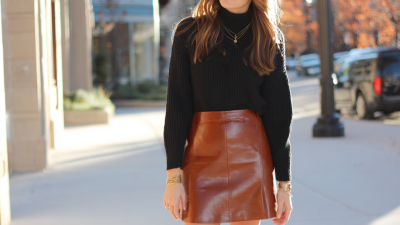
Faux Leather Skirt collections are moving beyond basic black pencil designs. Global buyers now expect sharper silhouettes, softer hand-feel, and more responsible material choices. Grand View Research estimates that the global synthetic leather market reached approximately USD 31 billion in 2022. Its report projects continued growth through 2030, supported by fashion, footwear, and automotive demand. That growth creates opportunity, but it also demands careful sourcing.
Stella McCartney, a leading sustainable fashion designer, has said, “I don’t think you have to sacrifice style for sustainability.” Her view explains the appeal of today’s Faux Leather Skirt. A well-made style can resemble smooth lambskin, hold a clean waistline, and survive repeated movement. However, appearance alone is not enough. Buyers should inspect polyurethane content, backing fabric, seam strength, color transfer, and peeling resistance. Small details matter.
The Textile Exchange Materials Market Report 2024 notes that global fiber production reached about 124 million tonnes in 2023. That figure reminds buyers that material growth also brings environmental pressure. Not all faux leather has the same impact. PVC, PU, recycled polyester, and bio-based alternatives require different assessments. Claims can sound impressive. They still need evidence.
This guide reviews ten Faux Leather Skirt styles for international buyers. It compares silhouettes, finishes, seasonal suitability, and commercial practicality. Some recommendations may not fit every market. That is worth admitting. A glossy mini may sell quickly in one city, yet feel unsuitable elsewhere. Product success depends on climate, customer habits, pricing, and honest specifications.
Faux leather skirts now cover ten practical silhouettes: mini, pencil, A-line, pleated, wrap, midi, maxi, slit, cargo, and asymmetric styles. Each shape serves a different buyer. A pencil skirt suits office wardrobes, while a pleated midi adds movement and softer volume. For product teams, the material matters as much as the cut. Polyurethane-coated fabric usually feels lighter and more flexible than PVC-coated fabric. A polyester or cotton backing controls comfort, strength, and drape.
Textile Exchange’s Materials Market Report 2024 estimates global fiber production reached
124 million tonnes in 2023. Polyester represented about
57 percent of that volume. This explains why polyester-backed faux leather remains common in international sourcing.
Buyers should inspect coating thickness, seam cracking, odor, peel resistance, and hydrolysis performance.
Small samples can mislead. A skirt may look smooth under showroom lights but stiffen after folding or heat exposure.
Recycled content can improve material planning, but it does not automatically prove lower impact.
Request verified composition records and test reports. Check waistband recovery, zipper quality, lining breathability, and color transfer on pale garments.
The European Environment Agency highlights durability as a key part of textile sustainability. That point is easy to overlook.
A fashionable asymmetric skirt with weak stitching becomes expensive waste quickly.
Market estimates also vary widely, so suppliers should compare definitions, regions, and reporting years before setting forecasts.

Faux leather skirts differ greatly by shape, finish, and movement. The A-line skirt offers an easy fit and balances wider hips. A pencil skirt creates a sharp, office-ready silhouette, but requires stretch for comfortable walking. The mini skirt feels youthful and works well with oversized knitwear. A midi skirt gives more coverage and suits cooler climates. I often check the hem first; uneven stitching can spoil an otherwise attractive design.
The wrap skirt adds adjustable comfort and creates a softer waistline. A pleated skirt brings movement, although thick faux leather may hold unwanted bulk. The asymmetric skirt looks fashion-forward through an angled hem, but buyers should inspect its balance on both sides. These shapes need different pattern-making skills. A narrow waistband may curl after repeated wear. That detail is easy to miss.
The cargo skirt combines utility pockets with a structured shape. Pocket placement matters, especially when items pull the fabric downward. The circle skirt offers generous movement and a relaxed, feminine outline. It can feel heavy when made with dense backing. The straight skirt is simple, versatile, and efficient for bulk purchasing. Yet simple is not always better. Buyers should compare material thickness, seam strength, lining, size grading, color consistency, and care instructions. Small differences affect returns across international markets. Test samples after sitting, bending, and light rubbing. A skirt can look excellent on a hanger and disappoint during a full day of wear.
Choosing the right faux leather skirt depends on the buyer’s lifestyle, climate, and preferred level of structure. Office-focused buyers often prefer pencil, A-line, or midi styles with clean seams. These shapes look polished without feeling overly formal. Younger fashion buyers may select mini, pleated, asymmetric, or cargo skirts for stronger visual impact. Wrap and side-slit designs offer easier movement. Maxi styles suit modest wardrobes and cooler seasons.
Material Performance Material performance matters as much as appearance. Check the backing fabric, surface softness, seam strength, and color consistency. Buyers in warm regions may prefer lightweight faux leather with breathable lining. In colder markets, a thicker surface and smooth interior can feel more practical. A flexible waistband helps comfort, but excessive stretch may reduce shape retention.
From reviewing similar products, I have found that buyers often choose photographs over function. That can create returns. A glossy finish may look attractive online but feel too bold in daily wear. A narrow slit can improve walking comfort, yet it may not suit every customer. I once underestimated pocket depth in a cargo style. That was a useful mistake. Size charts should include waist, hip, skirt length, and stretch measurements. Fit expectations vary across regions, so sample testing with local users remains valuable.
Top 10 Faux Leather Skirt Styles for Global Buyers
The ten strongest styles include pencil, A-line, pleated, wrap, mini, midi, maxi, cargo, panelled, and asymmetrical skirts. Each style needs a separate measurement chart, not a copied template. For pencil skirts, check hip ease and walking comfort. For pleated designs, inspect whether the folds stay sharp after steaming. Mini skirts require secure closures and reliable seam strength. Small details matter.
Material quality begins with the surface and backing. Ask for PU or PVC composition, thickness, peel strength, abrasion resistance, and hydrolysis testing. A sample may feel soft but crack after storage in humid conditions. Check odor after packaging, especially when cartons remain closed for several days. Colorfastness tests should include rubbing against light fabrics. I have seen attractive samples fail here.
Sizing must use actual body measurements and finished-garment measurements. Confirm waist, hip, length, hem, and zipper placement across every grade. A tolerance of one centimeter can change the fit noticeably. Request pre-production samples in several sizes. Do not trust one model fitting one size. Compliance checks should cover restricted substances, labeling, care instructions, flammability requirements, and applicable product-safety rules in each destination market. Keep test reports, material declarations, batch records, and factory inspection results together. Paperwork is not exciting. Missing paperwork is expensive.
| Rank | Skirt Style | Typical Length | Recommended Faux Leather | Key Quality Checkpoints | Fit and Sizing Considerations | Common Construction Details | Global Compliance Priorities | Commercial Positioning |
|---|---|---|---|---|---|---|---|---|
| 1 | Classic A-Line Skirt | Above-knee to midi | Soft PU with a medium-weight knitted or woven backing | Check uniform coating, smooth grain, flexible hand feel, and resistance to peeling after repeated flexing. | The flared silhouette is broadly accommodating. Provide waist, high-hip, low-hip, and total-length measurements; include finished hem circumference. | Waistband with clean topstitching, concealed side zipper, lining or partial lining, and stable hem allowance. | Verify restricted-substance testing, colorfastness, labeling, fiber-content declarations, and country-of-origin requirements for the destination market. | VersatileCore wardrobe |
| 2 | Pencil Midi Skirt | Knee to mid-calf | Stretch PU with controlled recovery and a durable textile backing | Test seam slippage, stretch recovery, surface cracking at the hip, and lining compatibility during walking and sitting. | Back vent or walking slit, shaped waistband, secure zipper, reinforced stress points, and optional stretch lining. | Confirm chemical compliance, seam-strength performance, color migration control, and care-label accuracy. Ensure the vent does not create a safety issue. | OfficewearPremium basic | |
| 3 | Mini Skirt | Upper-thigh to above-knee | Light to medium-weight PU with a soft backing | Inspect edge finishing, zipper attachment, abrasion resistance, and stability of the short hem during wear. | Clean waistband, concealed or exposed zipper, secure hem tape, and optional built-in shorts or lining for coverage. | Check labeling, flammability requirements where applicable, sharp-edge and small-part safety, and colorfastness to rubbing. | YouthfulHigh-volume fashion | |
| 4 | Wrap Skirt | Mini to midi | Supple PU or water-based PU with a flexible backing | Evaluate snap or tie security, overlap coverage, hole resistance, and coating flexibility around the fastening area. | Adjustable waist fastening, reinforced tabs, controlled overlap, clean internal finishing, and optional lining. | Test hardware for corrosion and nickel release when relevant, review chemical restrictions, and confirm care instructions for the coating. | Adjustable fitTravel-friendly | |
| 5 | Pleated Skirt | Mini to midi | Thin PU with consistent thickness and good pleat memory | Check pleat uniformity, coating flexibility, heat sensitivity, surface wrinkling, and recovery after folding. | Fixed or elastic waistband, evenly spaced pleats, secure inner finishing, and lining that does not restrict movement. | Confirm heat-transfer and ironing instructions, colorfastness, restricted-substance compliance, and accurate material declarations. | Trend-ledStatement piece | |
| 6 | Cargo Utility Skirt | Above-knee to midi | Medium-weight PU with abrasion-resistant backing | Inspect pocket load strength, bartacks, snap durability, seam reinforcement, and resistance to scuffing. | Patch pockets, belt loops, adjustable tabs, utility seams, reinforced corners, and durable zipper or snap closures. | Review hardware safety, nickel and lead restrictions where applicable, chemical testing, labeling, and packaging-material requirements. | Utility fashionCasualwear | |
| 7 | Bias-Cut Slip Skirt | Midi to ankle | Lightweight, drapable PU with a soft low-friction backing | Assess drape, stretch along the bias, seam distortion, static behavior, and coating appearance at curved seams. | Narrow waistband, side or back zipper, clean narrow hem, optional lining, and carefully finished seam allowances. | Confirm colorfastness, care-label instructions, chemical compliance, and packaging protection against permanent creasing. | OccasionwearFluid silhouette | |
| 8 | Tiered or Ruffle Skirt | Mini to midi | Lightweight PU with flexible, soft-touch backing | Check ruffle fullness, layer weight, seam durability, hem consistency, and resistance to cracking at gathered seams. | Multiple gathered tiers, elastic or shaped waistband, narrow hems, secure gathering stitches, and optional lining. | Verify flammability rules where relevant, colorfastness, restricted substances, label placement, and secure attachment of trims. | FeminineSeasonal fashion | |
| 9 | Asymmetric Skirt | Mini to midi with uneven hem | Medium-weight PU with stable stretch or a structured backing | Inspect hem shape consistency, panel matching, seam puckering, edge durability, and left-to-right symmetry where intended. | Shaped panels, concealed zipper, reinforced high-stress seams, clean asymmetric hem, and optional lining. | Confirm measurement tolerances, labeling, colorfastness to rubbing, chemical restrictions, and safe finishing of exposed edges. | Fashion-forwardEditorial look | |
| 10 | Long Column Skirt | Midi to ankle | Medium-weight PU with good drape, recovery, and backing stability | Test walking comfort, vent strength, stretch recovery, seam alignment, and resistance to bagging at the seat and knees. | High or mid-rise waistband, back or side vent, secure zipper, lining or slip construction, and reinforced movement points. | Review chemical and flammability requirements, care labeling, colorfastness, packaging-fold limits, and destination-market size labeling. | Modern tailoringElevated basics |
Sourcing note: Final specifications should be confirmed through approved samples, measurement sets, material testing, care-label review, and destination-market compliance checks. Faux leather commonly uses polyurethane or PVC coatings, so the exact composition and applicable legal requirements should be verified for each shipment.
International buyers often compare pencil, A-line, mini, midi, wrap, pleated, cargo, asymmetrical, tiered, and maxi skirts. Each style serves a different retail purpose. Pencil skirts suit office-inspired collections, while minis perform better in youth-focused markets. Midi and maxi lengths attract buyers seeking flexible, modest styling. A-line shapes offer broad size appeal and simpler fitting.
Costs depend on material thickness, surface finish, lining, hardware, labor, and order volume. PU usually supports a lower entry price, while softer coatings can increase comfort and production expense. PVC may provide a sharper appearance, but breathability can be weaker in warm climates. Buyers should test abrasion resistance, seam strength, colorfastness, and coating stability. Shipping distance and regional import requirements also affect landed cost. A low unit price can mislead.
Tips: Request samples in several sizes. Check the skirt under bright light and natural movement. Compare waist recovery after repeated wear. Ask suppliers for clear material specifications and production tolerances. Trends are useful, but forecasts are not perfect. Cargo details may attract attention this season, yet excessive hardware can raise costs and reduce comfort. In colder markets, lined midi skirts may sell steadily. In warmer regions, lighter constructions and ventilated designs deserve more attention. I have found that buyers sometimes overvalue appearance during sampling. That mistake can become expensive after bulk production.