Essential Tips for Sourcing Puffer Jackets Globally?
In the world of outerwear, sourcing puffer jackets globally has become increasingly vital. As winter approaches, this insulated garment trends upward in demand. According to a recent market report by Grand View Research, the global puffer jacket market is expected to reach $7.5 billion by 2025. This astonishing growth highlights the critical need for brands to navigate their sourcing strategies effectively.
Industry expert Dr. Sarah Lin, a leading textile researcher, emphasizes, “The quality of sourcing directly impacts a brand's reputation.” This statement underscores the necessity of selecting reliable manufacturers who prioritize quality. Manufacturers who overlook ethical practices or sustainable materials may face backlash. As sourcing challenges grow, brands must adapt to meet consumer expectations.
Transparency in sourcing and production practices is essential. This is where awareness plays a crucial role. A growing focus on technology, like virtual sampling, can enhance supply chain efficiency. However, while technology brings advantages, it may lead to oversight if not integrated thoughtfully. Reflecting on these challenges immerses brands deeper into the complexities of sourcing puffer jackets.
Understanding the Global Puffer Jacket Market Size and Trends
The global puffer jacket market continues to grow significantly. In 2022, its market size reached approximately $7 billion and is projected to expand at a compound annual growth rate (CAGR) of around 6% through 2030. This growth is driven by increasing demand for lightweight, insulated outerwear in various climates.
Consumer preferences are shifting towards sustainability. Eco-friendly materials and ethical sourcing are becoming essential considerations. Reports indicate that around 30% of shoppers are willing to pay more for sustainable products. However, brands must navigate sourcing challenges. High-quality materials may be hard to find, and production can be slow. This could affect inventory and timely delivery.
Market trends also highlight the importance of online sales channels. E-commerce accounted for nearly 30% of puffer jacket sales in 2023. This shift necessitates adaptable strategies for sourcing and distribution. Brands must leverage data to understand regional preferences and tailor their offerings. Engaging with manufacturers directly can streamline the sourcing process, though it requires careful management of relationships and quality assurance.
Key Materials and Insulation Technologies Used in Puffer Jackets
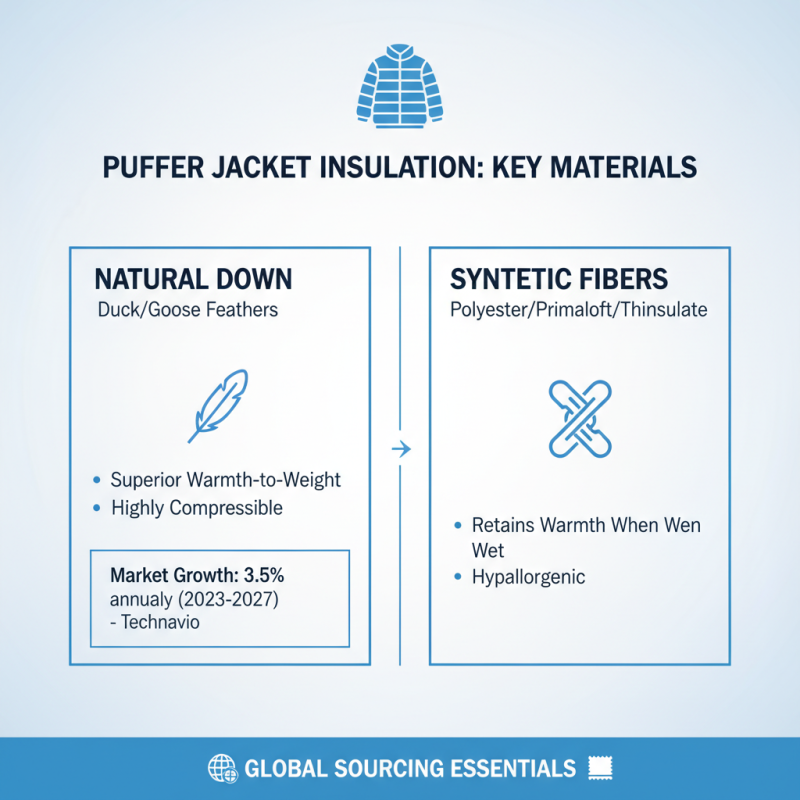
When sourcing puffer jackets globally, understanding key materials is essential. The main insulation types include down and synthetic fibers. Down, derived from ducks or geese, offers excellent warmth-to-weight ratios. According to a market analysis by Technavio, the global down insulation market is expected to grow by 3.5% annually from 2023 to 2027.
Synthetic insulation, such as polyester fibers, has gained popularity due to its moisture-resistant properties. It retains warmth even when wet, making it a reliable choice for outdoor activities. Reports indicate that synthetic insulation holds about 40% of the market share, reflecting its growing demand for versatile applications.
Different fabrics also play a crucial role. Materials like nylon and polyester are common for the outer shells. They provide durability and weather resistance. However, the environmental impact of production processes is often overlooked. Brands face scrutiny regarding sustainability, which could influence sourcing decisions in the future. Balancing quality, performance, and eco-friendliness remains a challenge for designers and manufacturers alike.
Evaluating Supplier Credentials and Manufacturing Capabilities
When sourcing puffer jackets globally, evaluating supplier credentials and manufacturing capabilities is crucial. A report by Market Research Future highlights that the outerwear market is expected to grow by 5% annually until 2027. Understanding your suppliers' qualifications helps ensure quality and reliability.
Look for suppliers who provide certifications related to ethical production. These may include audits from recognized organizations. A transparent supply chain is non-negotiable. Consider suppliers who have demonstrated experience in producing insulated garments, as they are more likely to understand specific fabric technologies.
It's important to assess the manufacturing facilities as well. Check if they have modern machinery. This ensures quality control and efficient production. Communication is key. Engage with potential suppliers directly. Questions about production capacity, lead times, and workforce conditions can reveal much about their reliability.
For added confidence, look for customer reviews or case studies. Quality isn’t just about materials; it's about the entire production process. Sometimes, the allure of lower costs can tempt buyers. However, sacrificing quality for price can lead to long-term issues. Prioritizing manufacturers with a proven track record will pay off in the long run.
Essential Tips for Sourcing Puffer Jackets Globally
| Supplier Name |
Country |
Annual Production Capacity |
Certifications |
Lead Time (Weeks) |
Minimum Order Quantity |
| Supplier A |
China |
500,000 units |
ISO 9001, BSCI |
8 |
1000 units |
| Supplier B |
Vietnam |
300,000 units |
OEKO-TEX, WRAP |
6 |
500 units |
| Supplier C |
Bangladesh |
400,000 units |
GOTS, ISO 14001 |
10 |
800 units |
| Supplier D |
Turkey |
200,000 units |
SA8000, ISO 9001 |
5 |
1500 units |
Navigating Import Regulations and Tariffs for International Sourcing
When sourcing puffer jackets globally, understanding import regulations and tariffs is crucial. Each country has its own set of rules. Research is essential. Failing to comply can lead to delays and unexpected costs.
Before placing orders, check the specific regulations for your target market. Some regions require compliance with safety standards. Others may impose higher tariffs on certain materials. Staying informed helps to avoid costly mistakes.
Tip: Work with a reliable
customs broker. They can guide you through complex regulations. Additionally, keep detailed records of your transactions. This practice simplifies future imports and ensures a smoother process. Understand that regulations can change. Regularly update your knowledge to stay compliant.
Moreover, consider the
environmental regulations regarding materials used in puffer jackets. Some countries have strict policies on synthetic fabrics. Thus, ensure that your suppliers are aware. Navigating these challenges takes time and effort, but it's essential for a successful sourcing experience.
Leveraging Sustainable Sourcing Practices in Puffer Jacket Production
Sourcing puffer jackets sustainably requires careful consideration. The materials used can significantly impact the environment. Opt for recycled fabrics and responsibly sourced down. These choices demonstrate a commitment to sustainability. For instance, using recycled polyester reduces plastic waste in landfills.
Building strong relationships with suppliers is crucial. Engage with manufacturers who prioritize eco-friendly practices. Regular audits can ensure compliance with sustainable standards. Transparency in the supply chain builds trust. It can also uncover areas for improvement. Effective communication about sustainability goals is essential.
However, challenges exist in sourcing sustainably. Costs may be higher for eco-friendly materials, which can pressure profit margins. Some suppliers might lack the infrastructure for responsible practices. This requires continuous evaluation and adaptation. Despite these hurdles, the long-term benefits for both the environment and brand reputation are significant. Finding a balance remains a journey worth pursuing.